
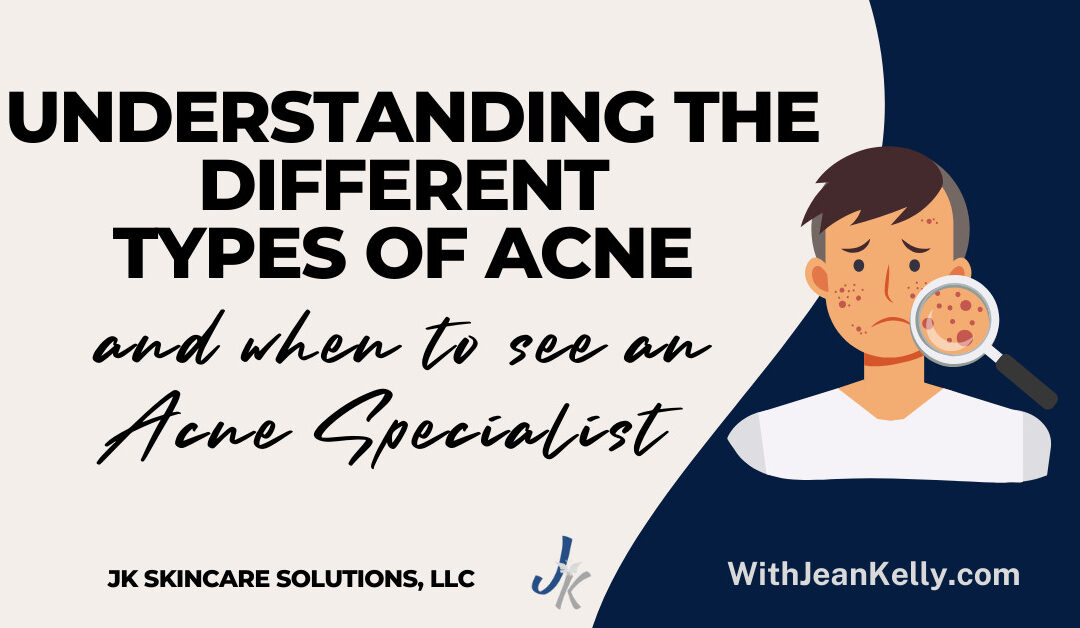
Understanding the Different Types of Acne and When to See an Acne Specialist

Understanding the Different Types of Acne and When to See an Acne Specialist

Understanding the Different Types of Acne and When to See an Acne Specialist

Acne can be a frustrating and persistent skin condition that affects people of all ages. From mild breakouts to more severe forms of acne, understanding the different types can help you determine the best course of treatment. Whether you’re dealing with occasional pimples or chronic cystic acne, knowing when it’s time to see an acne specialist can make all the difference in achieving clear skin.

In this blog post, we’ll explore the various types of acne, their levels of severity and when it’s important to seek professional help. Plus, I’ll share a free guide on “6 tips for hormonal acne” to help you on your journey to healthier skin!

1. Whiteheads (Closed Comedones)
Whiteheads are one of the most common forms of acne, characterized by small, flesh-colored or white bumps. These occur when pores become clogged with oil, dead skin cells and bacteria. Because they are closed under the surface of the skin, whiteheads do not cause inflammation.

Treatment: Whiteheads are generally mild and can be treated with acne products containing salicylic acid or benzoyl peroxide. Regular exfoliation can also help prevent new whiteheads from forming. It’s also important to maintain good gut health when you are seeing whiteheads.

When to see a specialist: If OTC treatments aren’t clearing your whiteheads after several weeks, an acne specialist may have a stronger topical treatment or retinoid.

2. Blackheads (Open Comedones)
Blackheads are similar to whiteheads, but the clogged pore is open, causing the trapped oil to oxidize and turn black. They are most commonly found on the nose, chin, and forehead.

Treatment: Blackheads respond well to salicylic acid and exfoliating cleansers. For stubborn blackheads, professional treatments like chemical peels or extractions by an acne specialist can help.

When to see a specialist: If blackheads are persistent or you notice an increase in the number of blackheads, it might be time to consult an expert for deeper exfoliation treatments.

3. Papules
Papules are small, red, inflamed bumps that do not contain pus. They occur when a clogged pore becomes irritated, leading to inflammation.

Treatment: Since papules can lead to more severe forms of acne, it’s important to treat them with anti-inflammatory ingredients like benzoyl peroxide or clay and sulfur-based treatments. Avoid picking or squeezing papules, as this can lead to scarring and spreading of the bacteria that may cause even more breakouts.

When to see a specialist: If you frequently experience papules and they don’t respond to OTC treatments, an acne specialist may recommend a customized skincare routine to reduce the inflammation and target the papules.

4. Pustules
Pustules are similar to papules but contain pus, giving them a white or yellowish head. They are typically red and inflamed, and squeezing them can result in scarring or further infection.

Treatment: OTC products with benzoyl peroxide or salicylic acid can help dry out pustules. A gentle cleanser and spot treatment should also be part of your skincare routine.

When to see a specialist: If you experience frequent pustules or they leave scars, an acne specialist can recommend targeted treatments such as retinoids, acne serums or even light therapy to reduce inflammation and bacteria.

5. Nodules
Nodular acne is a more severe form of acne where large, painful bumps form deep within the skin. Unlike pustules, nodules do not come to a head and can last for weeks or even months.

Treatment: Nodules often require a change in diet and professional intervention, as OTC treatments are usually ineffective. An acne specialist can customize a skincare routine to target this type of acne. If you are wanting to try prescription medications, it would be a good idea to start with a naturopathic doctor who may have other ideas that aren’t as harsh as the medications.

When to see a specialist: If you are dealing with nodular acne, it may be beneficial to seek help from an acne specialist to prevent long-term scarring and control the breakouts.

6. Cystic Acne
Cystic acne is the most severe form of acne, characterized by large, red, painful cysts deep under the skin. It is often hormonal and can result in significant scarring if not treated properly.

Treatment: Cystic acne typically requires a change in diet and a customize skincare routine to target the cystic acne.

When to see a specialist: Early intervention is key to preventing permanent scarring and managing the condition effectively.

When to See an Acne Specialist
While mild forms of acne like whiteheads and blackheads can often be managed with over-the-counter treatments, more severe types of acne, such as nodules and cysts, should be seen by an acne specialist. If your acne is causing scarring, pain or emotional distress, or if it doesn’t improve after several weeks of over-the-counter treatments, it’s time to see an acne specialist. My exclusive “Epidermal Repair Method” has helped hundred of teens control their acne. It’s not for everyone, but if you’d like to see if a personalized treatment plan using the Epidermal Repair Method with Cellular Turnover to clear your skin and prevent future breakouts can benefit you, just email me at AcneClinic111@gmail.com and we can see if you would be a good fit.

Get Your Free Guide!
Are you struggling with hormonal acne or looking for more tips to help clear your skin? Don’t miss out on my FREE guide: 6 Tips for Hormonal Acne! Packed with actionable advice, this guide will help you get started on the path to healthier skin. Click the link HERE to grab your copy and take control of your acne today!

Have a fabulous day!

Jean Kelly
Licensed Esthetician
Acne Specialist

Mom’s come to me when they’ve tried everything but their teens acne just won’t clear.

PS.
You’re invited to join my free Facebook Group “Parents of Teens With Acne”, join HERE

If you want to get started right away with some secrets that are easy to implement and don’t cost any money, grab the online mini course “Clear Skin Secrets” HERE and start using the secrets today! It’s super affordable at only $28 and lots of moms are jumping in before the price goes up.
The Ultimate DIY Honey Mask for Acne

The Ultimate DIY Honey Mask for Acne

The Ultimate DIY Honey Mask for Acne: Recipes and Benefits of Honey as a Natural Remedy

Acne is a frustrating skin condition that affects people of all ages, but natural remedies can provide relief without harsh chemicals or expensive treatments. One powerful natural ingredient for treating acne is honey. Honey has been used for centuries for its medicinal and skincare properties, and it’s a favorite in the world of DIY skincare. If you’re looking for an affordable, effective and gentle way to clear your skin, a DIY honey mask might be your answer.

Why Honey?
Honey isn’t just a sweet treat; it’s a skincare powerhouse. Here’s why honey is beneficial for treating acne and supporting overall skin health:

Antibacterial Properties: Acne is often caused by bacteria trapped in pores, leading to inflammation and breakouts. Honey has natural antibacterial properties that can help reduce acne-causing bacteria, thus reducing the likelihood of breakouts.

Anti-Inflammatory Effects: Inflammation plays a big role in acne, leading to redness, swelling and irritation. Honey’s soothing properties help calm the skin and reduce inflammation, making it especially helpful for inflamed or cystic acne.

Moisturizing: Many acne treatments can be drying, but honey is naturally hydrating. Its humectant properties help your skin retain moisture without clogging your pores, leaving your skin soft and balanced.

Gentle Exfoliation: Honey contains enzymes that promote a mild exfoliation, removing dead skin cells that can clog pores and cause acne. This gentle exfoliation helps improve skin texture and brightness without irritating the skin.

Rich in Antioxidants: Honey is full of antioxidants, which can help repair damaged skin, fade acne scars and protect your skin from environmental stressors that can worsen acne.

With these benefits in mind, let’s dive into some easy and effective DIY honey mask recipes that you can try at home. Please note that you should always spot test to make sure your skin can tolerate the recipe before using as a mask.

1. Basic Honey Mask
This is the simplest honey mask you can make. It’s perfect for sensitive skin types and can be used as a daily treatment.

Ingredients:

1 tablespoon of raw honey (preferably organic)
Instructions:

Cleanse your face with a gentle cleanser and pat it dry.
Apply a thin layer of honey to your face, avoiding the eye area.
Leave it on for 15-20 minutes.
Rinse with warm water and pat dry.
Benefits: This basic mask hydrates, soothes and reduces bacteria on the skin, making it great for treating mild acne or maintaining clear skin.

2. Honey and Cinnamon Acne Mask
Cinnamon, like honey, has antibacterial properties that can help fight acne-causing bacteria. This combination is ideal for more severe or stubborn acne.

Ingredients:

1 tablespoon raw honey
1 teaspoon cinnamon powder
Instructions:

Mix the honey and cinnamon together to form a paste.
Apply the mask evenly to your face.
Leave it on for 10-12 minutes (cinnamon can be a bit strong, so don’t leave it on too long).
Rinse thoroughly with warm water.
Benefits: The honey-cinnamon combination fights bacteria, reduces inflammation and helps dry out active pimples without over-drying the skin.

3. Honey and Aloe Vera Mask
Aloe vera is well known for its soothing and healing properties, making it a great partner with honey for irritated or inflamed skin.

Ingredients:

1 tablespoon raw honey
1 tablespoon fresh aloe vera gel
Instructions:

Mix the honey and aloe vera gel until well combined.
Apply the mixture to your clean face.
Leave it on for 20 minutes.
Rinse with cool water and pat dry.
Benefits: This mask soothes redness and inflammation, speeds up healing and hydrates the skin. It’s perfect for calming acne flare-ups or treating sunburned, irritated skin.

4. Honey and Turmeric Mask
Turmeric is a powerful anti-inflammatory ingredient that works wonders for acne-prone skin. When combined with honey, it helps reduce acne scars, calm irritated skin and prevent future breakouts.

Ingredients:

1 tablespoon raw honey
½ teaspoon turmeric powder
Instructions:

Mix the honey and turmeric into a smooth paste.
Apply the mixture to your face, concentrating on acne-prone areas.
Leave it on for 10-15 minutes (turmeric can stain, so use this mask carefully).
Rinse off with warm water.
Benefits: The anti-inflammatory and antibacterial properties of turmeric and honey work together to reduce acne, lighten scars and even out skin tone.

Tips for Using Honey Masks
Patch Test: Always do a patch test before applying any mask to your entire face, especially if you have sensitive skin.
Consistency is Key: Natural remedies like honey work best when used consistently. Incorporate a honey mask into your routine 2-3 times a week for noticeable results.
Use Raw Honey: Always opt for raw, organic honey for your masks. Processed honey can lose some of its beneficial properties.

Honey is a gentle, affordable and effective solution for acne-prone skin. Whether you’re battling occasional breakouts or chronic acne, incorporating a DIY honey mask into your skincare routine can help soothe and clear your skin naturally. With the antibacterial, anti-inflammatory and moisturizing benefits honey provides, it’s a remedy you can rely on to get clearer, healthier skin. Try one of these simple recipes and see the difference for yourself!

As a bonus, make sure to grab my FREE guide: 6 Tips for Hormonal Acne, packed with practical tips to help you see results faster!

Have a fabulous day!

Jean Kelly
Licensed Esthetician
Acne Specialist

Mom’s come to me when they’ve tried everything but their teens acne just won’t clear.

PS.
You’re invited to join my free Facebook Group “Parents of Teens With Acne”, join HERE

If you want to get started right away with some secrets that are easy to implement and don’t cost any money, grab the online mini course “Clear Skin Secrets” HERE and start using the secrets today! It’s super affordable at only $28 and lots of you are jumping in now before the price goes up.

The Truth About Oil-Free Products: Do They Really Help With Acne?

The Truth About Oil-Free Products: Do They Really Help With Acne?

The Truth About Oil Free Products: Do They Really Help With Acne?

When your teen is struggling with acne, it’s easy to reach for products labeled “oil-free” in hopes that they’ll help control breakouts. After all, excess oil is often blamed for clogging pores and causing acne. But are oil-free products truly the solution? Do they really help, or are they just another label that leaves you and your teen disappointed?

For many moms like you, feeling helpless as you watch your teen battle with acne can be overwhelming. You want to find something that works without resorting to overly complicated skincare routines or harsh chemicals that irritate your teen’s sensitive skin. So, let’s dive into the truth about oil-free products and explore if they’re the right choice for your teen’s acne.

What Are Oil-Free Products?
Oil-free products are exactly what they sound like, skincare products formulated without added oils. These are marketed as being less likely to clog pores (non-comedogenic) and are often recommended for people with oily or acne-prone skin. The idea is that by avoiding oils, you can reduce the amount of sebum (natural skin oil) on the skin’s surface, which, in theory, should help prevent breakouts.

Do Oil-Free Products Really Help?
For some people, oil-free products can be beneficial, particularly if your teen’s skin is naturally oily. Using oil-free cleansers, moisturizers and sunscreens can help minimize excess oil and prevent clogging of the pores. However, the effectiveness of oil-free products isn’t universal, and they’re not always the magic bullet they seem to be.

Here’s the truth: While oil-free products can help reduce excess oil, they often lack the moisturizing properties that the skin needs to stay balanced. Stripping away too much oil can lead to dehydration, causing the skin to produce even more oil to compensate. This can create a frustrating cycle of oiliness and dryness, leaving your teen’s skin barrier out of balance.

What many parents like you don’t want is a skincare regimen that feels overwhelming or products that only provide temporary relief without addressing the root cause of the acne. It’s understandable to be tired of trial and error, constantly switching from one oil-free product to the next, only to be left with unsatisfactory results.

Are There Better Solutions for Teen Acne?
While oil-free products may have their place, they shouldn’t be the only approach to treating acne. In fact, focusing solely on avoiding oils might prevent you from discovering more effective solutions that could work for your teen’s unique skin.

That’s where my exclusive “Epidermal Repair Method” comes in. This method isn’t just about slapping on products labeled “oil-free.” It’s about treating acne gently, addressing not only the skin’s surface but also the underlying causes like hormonal imbalances, inflammation and dietary triggers. With this method, teens are seeing real success without the need for overly complicated routines or harsh medications. Many moms have shared their relief at finding a solution that works without having to constantly monitor every meal or invest in expensive products that don’t deliver results.

What Should You Look for in Skincare Products?
When choosing skincare for your teen, look beyond just the “oil-free” label. Focus on finding products that are:

Non-comedogenic: These won’t clog pores.
Hydrating: Look for ingredients like hyaluronic acid or glycerin that help maintain the skin’s moisture balance.
Gentle: Avoid harsh chemicals or fragrances that can irritate sensitive skin.
Additionally, consider professional treatments like the Epidermal Repair Method, which focuses on repairing the skin barrier, reducing inflammation and addressing the deeper causes of acne. By taking a balanced approach, your teen can achieve clearer skin without having to manage constant breakouts or deal with endless skincare trials that feel like wasted time and money.

While oil-free products can help some teens with acne, they aren’t the end-all solution. What’s most important is finding a skincare routine that’s both effective and manageable for your teen’s lifestyle, one that doesn’t leave them feeling self-conscious or overwhelmed. If you’re ready to explore a more natural approach, consider my Epidermal Repair Method, which is helping teens achieve real, lasting results.

You don’t have to keep feeling helpless or worried about missing out on the perfect solution. Take the first step toward helping your teen get their confidence back, without overly complicated routines or products that fall short.

Have a fabulous day!

Jean Kelly
Licensed Esthetician
Acne Specialist

Moms come to me when nothing else worked, and their teen’s acne won’t clear

PS.
You’re invited to join my free Facebook Group “Parents of Teens With Acne”, join HERE

If you want to talk about my “Epidermal Repair Method with Cellular Turnover” , email me to see if it is right for you: AcneClinic111@gmail.com

If you want to get started right away with some secrets that are easy to implement and don’t cost any money, grab the online mini course “Clear Skin Secrets” HERE and start using the secrets today! It’s super affordable at only $28 and lots of moms are jumping in before the price goes up.
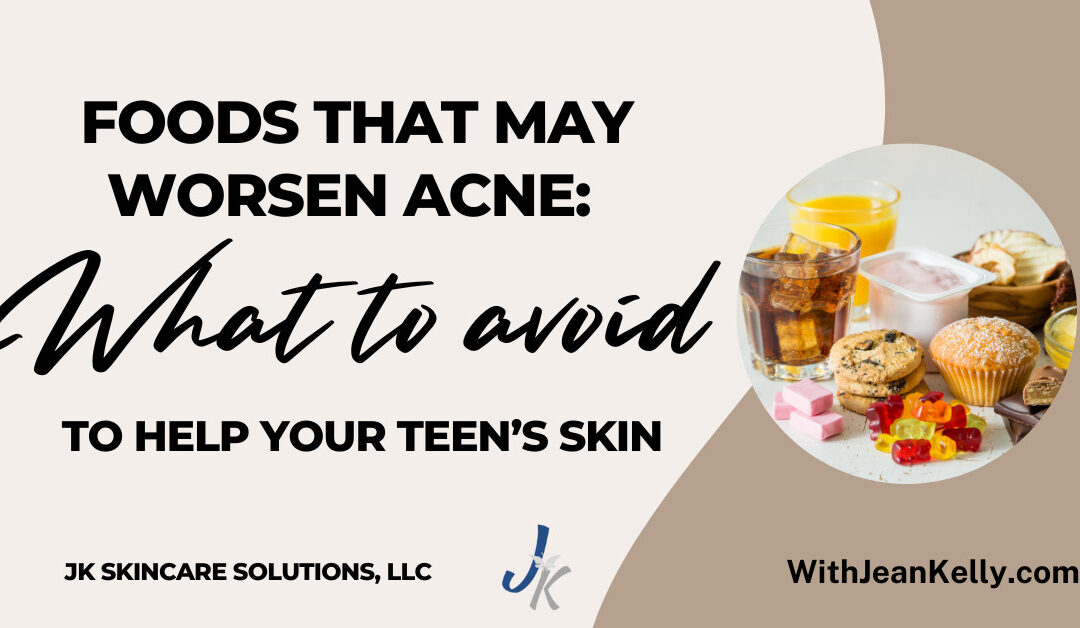
Foods That May Worsen Acne: What to Avoid to Help Your Teen’s Skin

Foods That May Worsen Acne: What to Avoid to Help Your Teen’s Skin

“Foods That May Worsen Acne: What to Avoid to Help Your Teen’s Skin”

As a mom, you naturally want to do everything you can to help your teen feel confident and comfortable in their own skin. When acne flares up, it can leave you feeling helpless, inadequate and even judged by others, especially if it seems like nothing is working. You might find yourself asking, “Am I missing something that could make a difference?” or worrying about not taking action soon enough.

One important but often overlooked aspect of acne management is diet. While acne is often linked to hormones, genetics and skincare routines, what your teen eats may also play a significant role in their breakouts. Knowing what foods to avoid can be a game-changer in your teen’s acne journey, and it can give you a sense of control over the situation.

How Diet Impacts Acne
Several studies suggest that certain foods can contribute to acne flare-ups. While there isn’t a one-size-fits-all solution, some foods are more likely to cause problems for acne-prone skin. By becoming aware of these triggers, you can help your teen avoid unnecessary breakouts and, in turn, help them regain their confidence.

Below is a detailed list of common foods associated with acne flare-ups and why they might be worsening your teen’s skin.

1. High-Glycemic Foods
Foods with a high glycemic index (GI) cause blood sugar levels to spike quickly, leading to increased insulin production. Higher insulin levels can trigger excess oil production in the skin, clogging pores and contributing to breakouts.

High Glycemic Foods to Avoid:

White bread and bagels
Sugary cereals
Processed snacks like chips and crackers
White rice
Sweets like candies, cakes, and cookies
Sugary drinks like soda and fruit juices

These high-glycemic foods may cause inflammation in the body, which is a major trigger for acne flare-ups. By reducing these foods, you might see a noticeable improvement in your teen’s skin.

2. Dairy Products
There is evidence to suggest that dairy, especially milk, may be linked to acne. This is particularly true for skim milk, which has been associated with more frequent breakouts. Dairy contains hormones that can trigger inflammation and increase oil production, both of which can lead to acne.

Dairy Foods to Avoid:

Skim milk
Full-fat milk
Ice cream
Cheese (particularly soft and processed varieties)
Yogurt with added sugars

Cutting back on dairy could help reduce breakouts, particularly around the jawline and chin, which are often hormonal acne hotspots.

3. Sugary Foods and Drinks
Sugar is inflammatory, and high sugar intake has been linked to worsened acne symptoms. When your teen consumes too much sugar, it can spike insulin levels, increase inflammation and lead to clogged pores…. all key contributors to acne flare-ups.

Sugary Foods to Avoid:

Sodas and energy drinks
Candy and chocolates with added sugars
Sweetened teas and coffee drinks
Desserts like cookies, pastries and cakes
Sugary breakfast cereals

Even “healthy” foods like granola or fruit-flavored yogurts can be packed with hidden sugars, so it’s important to read labels carefully.

4. Fast Food
Greasy, processed fast food is often high in unhealthy fats and refined carbohydrates, which can contribute to inflammation and acne. While an occasional indulgence is fine, making fast food a regular part of your teen’s diet may lead to more frequent and severe breakouts.

Fast Foods to Avoid:

Chicken Nuggets and fries (anything fried)
Pizza with processed meats and heavy cheeses
Milkshakes and sugary beverages from fast-food chains

By steering your teen away from these greasy options, you can help reduce their skin’s oil production and improve its overall health.

5. Whey Protein
Whey protein, commonly used in protein shakes and bars, is a common culprit in triggering acne flare-ups. It’s believed to increase insulin-like growth factor (IGF-1), a hormone that promotes excess oil production.

Whey Protein Foods to Avoid:

Whey protein shakes
Protein bars with whey protein isolate
Some sports drinks and supplements

If your teen is into fitness and uses whey protein for muscle building, consider switching to plant-based protein powders, which are less likely to trigger acne.

Taking Action
As a mom, it’s easy to feel overwhelmed by the pressure to find the “perfect” solution for your teen’s acne. The fear of regret, wondering if you’ve missed something crucial, can weigh heavily, especially when it comes to something as simple yet impactful as diet. But taking small, intentional steps like planning meals ahead and adjusting their food choices can make a noticeable difference.

You don’t have to go through this journey alone. By learning what foods may be contributing to your teen’s breakouts, you’re already taking important action. You’re helping them build confidence not only in their skin but in knowing they have your unwavering support.

Get Your Free Mom’s Guide to Teen Acne Today!
If you’re looking for more ways to help your teen’s acne improve, download my free “Mom’s Guide to Teen Acne”. This guide offers practical tips, dietary advice and skincare strategies to help your teen achieve clearer skin. Grab your copy HERE and take the next step in supporting your teen through their acne journey!

How Teen Acne Impacts Self-Esteem and Body Image

How Teen Acne Impacts Self-Esteem and Body Image

The Hidden Battle: How Teen Acne Impacts Self-Esteem and Body Image

Acne is more than just a skin condition; for many teenagers, it becomes a significant emotional hurdle that can profoundly affect their self-esteem and body image. As parents, understanding the deep connection between acne and a teen’s mental well-being is crucial in supporting them through this challenging time.

The Emotional Toll of Acne
During adolescence, teens undergo numerous physical and emotional changes. Acne often emerges as one of the most visible signs of these transformations, leading to feelings of self-consciousness and insecurity. The persistent presence of pimples, blackheads and cystic acne can make teens feel unattractive and less confident in their appearance.

The Impact of Acne on Teen Self-Esteem
When acne first appears, it can be embarrassing for teens. They may avoid social interactions, shy away from group activities and even skip school to hide their skin. This withdrawal can lead to feelings of loneliness and isolation, exacerbating their emotional struggles. Over time, persistent acne can erode a teen’s self-worth, making them believe that their value is solely tied to their appearance. I can remember mornings when my daughter begged me not to make her go to school during her really bad cystic breakouts. As a parent, that is heartbreaking to see your child feel that way.

Body Image and Peer Relationships
Body image plays a pivotal role in a teen’s overall self-esteem. Teens are highly influenced by their peers and societal standards of beauty, often striving to fit in and be accepted. Acne disrupts this pursuit, causing teens to compare themselves unfavorably to their peers. They may develop a negative body image, feeling that their skin imperfections define who they are.

Acne and Teen Body Image Issues
This negative self-perception can lead to more severe mental health issues, such as anxiety and depression. Teens might constantly worry about how others perceive them, leading to excessive grooming habits or reliance on makeup to cover blemishes. These behaviors, while sometimes helpful in the short term, can create a vicious cycle of self-scrutiny and dissatisfaction. Wearing heavy makeup can also cause the breakouts to get worse adding to that vicious cycle.

Self-Confidence in Daily Life
Acne can significantly diminish a teen’s confidence in various aspects of their daily life. Whether it’s participating in sports, performing in school plays or simply interacting with friends, the fear of being judged for their skin can hold teens back from fully engaging in activities they enjoy. This lack of confidence can hinder their personal growth and limit their potential.

Boosting Teen Confidence With Acne
Moreover, the stress and frustration of dealing with acne can make it difficult for teens to focus on their studies or extracurricular activities. The constant battle with their skin can drain their energy and make them feel overwhelmed, impacting their academic performance and overall enthusiasm for life.

Supporting Your Teen Through Acne
As a parent, your support can make a world of difference in your teen’s journey with acne. Here are a few ways to help:

Open Communication: Encourage your teen to talk about how they’re feeling. Listen without judgment and validate their emotions. Let them know that their feelings are real and important.

Promote Healthy Habits: Help your teen establish a gentle skincare routine and a balanced diet that supports skin health. Educate them about the importance of avoiding harsh treatments that can worsen acne.

Build Their Confidence: Focus on your teen’s strengths and encourage activities that make them feel good about themselves. Reinforce positive self-image by highlighting their talents, achievements, and unique qualities.

Seek Professional Help: If acne is severely impacting your teen’s mental health, consider consulting an acne specialist or a mental health professional. Professional guidance can provide effective treatment options and emotional support.

Acne is a common issue during the teenage years, but its impact on self-esteem and body image can be profound. By understanding the emotional challenges your teen faces and providing compassionate support, you can help them navigate this difficult period with resilience and confidence.

Are you looking for more ways to support your teen through their acne journey? Download my free “Moms Guide to Teen Acne” today! This comprehensive guide offers practical tips, emotional support strategies and effective treatment options to help your teen achieve clearer skin and build their self-esteem. Don’t let acne define your teen’s confidence, grab your free guide HERE and take the first step towards a brighter, more confident future for your child.

Have a fabulous day!

Jean Kelly
Licensed Esthetician
Acne Specialist

Moms come to me when nothing else worked, and their teen’s acne won’t clear

PS.
You’re invited to join my free Facebook Group “Parents of Teens With Acne”, join HERE

If you want to get started right away with some secrets that are easy to implement and don’t cost any money, grab the online mini course “Clear Skin Secrets” HERE and start using the secrets today! It’s super affordable at only $28 and lots of moms are jumping in before the price goes up.

How to Choose the Right Cleanser for Your Skin Type: Oily, Dry, and Combination Skin

How to Choose the Right Cleanser for Your Skin Type: Oily, Dry, and Combination Skin

“How to Choose the Right Cleanser for Your Skin Type: Oily, Dry, and Combination Skin”

Choosing the right cleanser is the foundation of any skincare routine. The right product will not only remove dirt, oil and makeup but also leave your skin feeling balanced and refreshed. With so many options out there, it can be overwhelming to find a cleanser that fits your skin’s specific needs. Whether you have oily, dry or combination skin, this guide will help you pick the perfect cleanser to keep your skin healthy and glowing.

Oily Skin: Look for Oil Control
If your skin tends to feel shiny throughout the day and you struggle with frequent breakouts, you likely have oily skin. The key to choosing a cleanser for oily skin is finding one that removes excess oil without stripping your skin of essential moisture. Avoid harsh cleansers that leave your face feeling tight and dry, because this can trigger even more oil production.

When shopping for a cleanser, look for the following ingredients:

Salicylic acid: This ingredient helps unclog pores and exfoliate the skin, making it a great option for preventing breakouts.
Benzoyl peroxide: Ideal for fighting acne, this ingredient targets acne-causing bacteria while reducing oil.
Clay-based cleansers: These help absorb excess oil, leaving your skin matte and shine-free.
Avoid cleansers that contain heavy oils or moisturizers, as they can clog your pores and make your skin feel greasier.

Dry Skin: Focus on Hydration
Dry skin is prone to flaking, irritation and a tight itchy feeling, especially after cleansing. When choosing a cleanser for dry skin, it’s important to focus on hydration and soothing ingredients that won’t strip away the skin’s natural oils. A cream or milk-based cleanser is often the best choice for dry skin, as these formulas are gentle and moisturizing.

Look for these hydrating ingredients:

Hyaluronic acid: Known for its ability to hold moisture, hyaluronic acid helps your skin stay hydrated and plump.
Glycerin: This is a humectant that draws moisture into the skin, helping it stay hydrated.
Aloe vera: This soothing ingredient is perfect for calming irritation and adding moisture to dry skin.
Avoid cleansers with alcohol, sulfates or fragrances, as these can further dry out your skin and cause irritation.

Combination Skin: Balance is Key
Combination skin can be tricky because it has both oily and dry areas. Typically, the T-zone (forehead, nose and chin) tends to be oily, while the cheeks are dry. The goal for combination skin is to find a cleanser that balances the oil production without over-drying certain areas.

For combination skin, look for these ingredients:

Tea tree oil: This natural ingredient helps control oil while still being gentle enough for drier areas.
Alpha-hydroxy acids (AHAs): AHAs provide gentle exfoliation that can help smooth out the skin’s texture without stripping moisture.
Gel-based cleansers: A gel cleanser can help control oil in the T-zone while being mild enough for the drier parts of your face.
Avoid cleansers that are too drying, as they can cause your skin to produce more oil in response. At the same time, stay away from overly rich or creamy cleansers that may clog pores in the oilier areas.

Tips for All Skin Types
Regardless of your skin type, here are a few universal tips for choosing and using a cleanser:

Cleanse your face twice a day: Once in the morning to remove overnight oils and once in the evening to clear away the day’s buildup.
Use lukewarm water, as hot water can strip your skin of its natural oils.
Always follow up with a moisturizer suited for your skin type.

Get Your Free Pore-Clogger List!
Still struggling with breakouts and clogged pores? You may be using products with hidden pore-clogging ingredients. Grab my free Pore Clogger List to discover which ingredients to avoid and start making smarter skincare choices today. Get your guide HERE and keep your pores clean and clear!

Have a fabulous day!

Jean Kelly
Licensed Esthetician
Acne Specialist

Mom’s come to me when they’ve tried everything but their teens acne just won’t clear.

PS.
You’re invited to join my free Facebook Group “Parents of Teens With Acne”, join HERE

If you want to get started right away with some secrets that are easy to implement and don’t cost any money, grab the online mini course “Clear Skin Secrets” HERE and start using the secrets today! It’s super affordable at only $28 and lots of moms are jumping in before the price goes up.